Cevurı: Meaning, Origin, Uses, and Cultural Context
Cevurı is an unusual term that has recently attracted attention because it appears in different online contexts with no single, universally accepted definition. Some discussions connect it with the Turkish word “çeviri,” meaning translation, while others describe it as an internet expression, a metaphor for transformation, or even the name of a traditional food. The problem is that these explanations do not all have the same level of support.
That uncertainty is what makes Cevurı interesting. Rather than treating every online claim as established fact, it is more useful to examine the possible linguistic connection, the way unusual spellings develop online, and the reasons different writers have attached different meanings to the term.
What Is Cevurı?
Cevurı is best understood as an ambiguous or nonstandard term whose meaning depends heavily on where it appears. Unlike familiar words with a well-established dictionary definition, Cevurı does not have one universally recognized meaning.
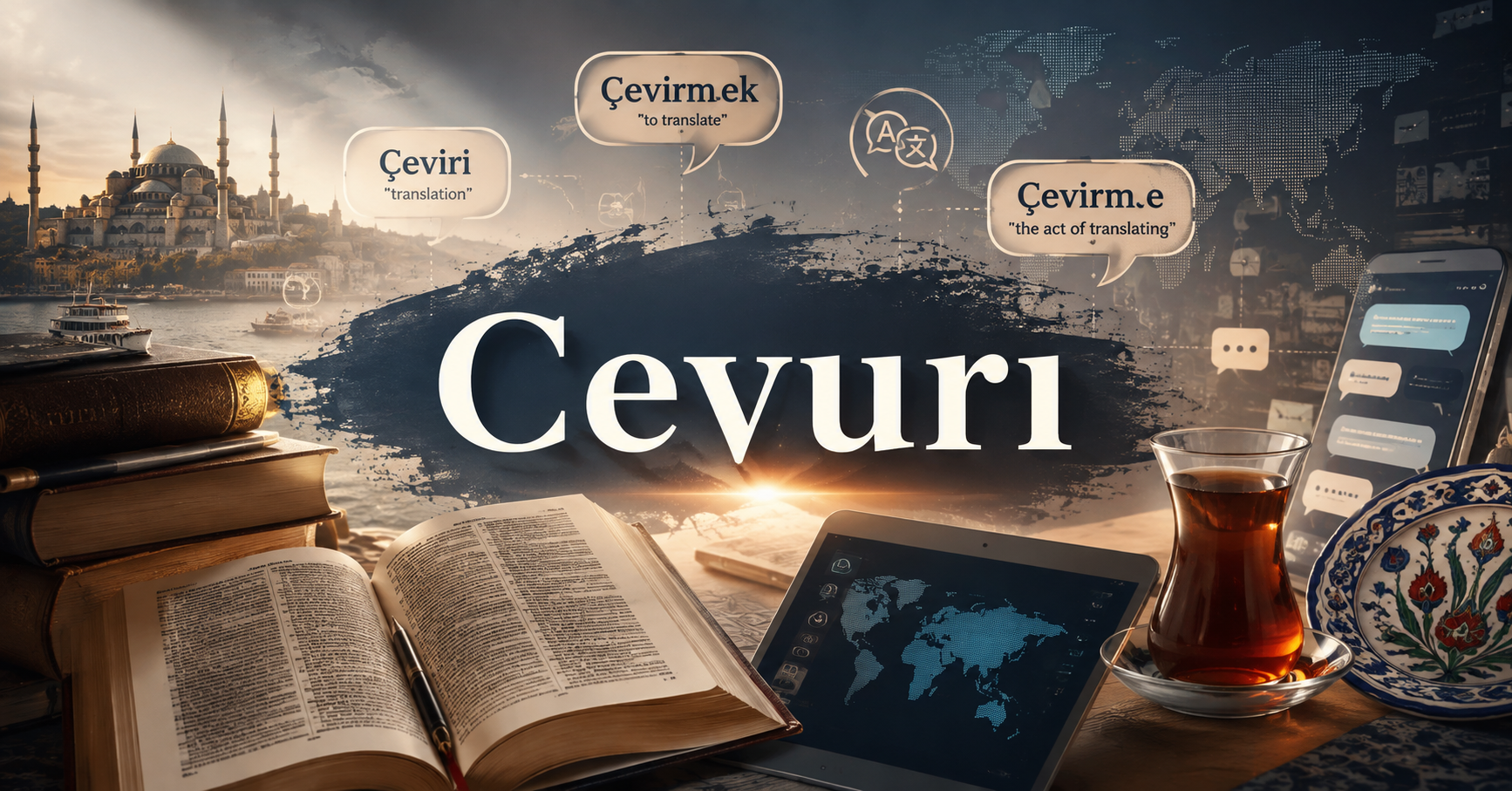
One of the strongest recurring explanations connects it with the Turkish word “çeviri,” which means translation. The similarity between the two forms has led some writers to suggest that Cevurı may have developed through altered spelling, transliteration, typing mistakes, or informal internet usage.
Other interpretations have emerged as the term has appeared on newer websites. Some describe it as an internet-born expression associated with language and translation, while others use it more metaphorically to represent change, adaptation, or transformation.
There are also websites that present Cevurı as a traditional Anatolian food. However, descriptions of that supposed dish differ considerably, making the culinary interpretation much less certain than the linguistic connection.
The safest approach is therefore to treat Cevurı as a developing and ambiguous online term rather than automatically assigning it one fixed definition.
What Does Cevurı Mean?
The meaning of Cevurı depends on context.
When the term appears alongside discussions about languages, translation, multilingual communication, or digital language, it is often associated with the Turkish word “çeviri.” In that context, it may be intended to suggest translation, reinterpretation, or the movement of meaning between languages.
In lifestyle or reflective writing, Cevurı has sometimes been used as a metaphor for personal change. Such contexts, it can suggest a process of becoming, adapting, or moving from one state to another.
A completely different interpretation appears in culinary content, where Cevurı has been presented as a meat-and-vegetable preparation associated with Anatolian cuisine.
These meanings should not automatically be treated as interchangeable. A word can acquire new interpretations online, but that does not mean every interpretation represents its original or established meaning.
For that reason, the most accurate answer to “What does Cevurı mean?” is that it is an ambiguous, nonstandard term with several competing online interpretations, with a possible linguistic relationship to Turkish “çeviri.”
Is Cevurı a Real Turkish Word?
This is one of the most important questions surrounding the term.
Cevurı should not simply be presented as a standard Turkish dictionary word. The established Turkish term for “translation” is “çeviri,” not Cevurı.
The unusual spelling may look Turkish because it contains letter patterns associated with Turkish words, including the dotless “ı.” However, looking Turkish is not enough to establish that a word belongs to standard Turkish vocabulary.
This distinction matters because online articles can unintentionally turn speculation into apparent fact. When several websites repeat the same explanation, readers may assume that the explanation has been officially established. Repetition, however, is not the same as linguistic evidence.
It is therefore better to describe Cevurı as a nonstandard or emerging online form unless stronger evidence demonstrates otherwise.
Cevurı and the Turkish Word “Çeviri”
The connection between Cevurı and “çeviri” is probably the most important linguistic angle.
In Turkish, “çeviri” means translation. It refers to transferring written or spoken meaning from one language into another. Translation can involve words, sentences, documents, conversations, literature, technical material, and many other forms of communication.
The connection becomes interesting because the Turkish verb “çevirmek” carries meanings associated with turning, changing, converting, or translating. The underlying concept can therefore be understood as moving something from one form or direction into another.
Translation works in a similar conceptual way. A translator takes meaning expressed in one language and transforms it into another language while attempting to preserve the original message.
This linguistic relationship may explain why Cevurı has become associated with translation in online discussions.
However, it is important not to reverse the logic and claim that Cevurı is definitively the Turkish word for translation. It is not. “Çeviri” is the established Turkish term.
Why Does Cevurı Look Similar to Çeviri?
There are several reasons an unusual online spelling can resemble an established word without being identical to it.
Spelling Drift
When people type words quickly, especially in informal conversations, letters can be changed, omitted, or rearranged. A spelling that begins as an error can sometimes be repeated by other users.
Keyboard Differences
Not every keyboard is configured for Turkish characters. People using English-language keyboards may replace special characters with more familiar ones.
The Turkish “ç” may become “c,” while the dotless “ı” may be replaced with “i.” Such substitutions can make Turkish words look very different from their original forms.
Transliteration
When a word moves between writing systems or languages, users often attempt to represent unfamiliar sounds using the letters available to them.
Autocorrect and Search Behavior
Autocorrect systems can change unfamiliar words. Search engines can also preserve unusual spellings when enough people search for them.
Deliberate Internet Spelling
Sometimes users intentionally alter a word because the modified version looks distinctive, humorous, memorable, or suitable for a username or online trend.
Together, these factors provide plausible explanations for how unusual forms such as Cevurı can become visible online.
Cevurı and the Linguistic Idea of Transformation
The possible connection between Cevurı and Turkish terminology becomes more interesting when looking at the broader idea of transformation.
Translation is not simply replacing one word with another. A translator has to consider meaning, tone, cultural context, sentence structure, idioms, and the expectations of the target audience.
In that sense, translation is a form of transformation.
A message begins in one linguistic form and emerges in another. The objective is not necessarily to preserve every individual word, but to preserve the intended meaning.
This broader idea of transformation may explain why some modern writers use Cevurı metaphorically. They use the term to suggest movement from one state to another, whether that involves language, identity, technology, communication, or personal development.
However, this metaphorical usage should be treated as a modern interpretation rather than a formal dictionary definition.
Is Cevurı an Internet-Born Term?
Cevurı has many characteristics associated with internet-born terminology.
Digital communication creates an environment where words can spread extremely quickly. A typo, joke, nickname, shortened expression, or unusual spelling can move from one conversation to thousands of searches within a short period.
Unlike traditional vocabulary, internet expressions do not always require approval from dictionaries, academics, or language institutions before people begin using them.
A typical development might look like this:
Unusual spelling → repeated online usage → search interest → explanatory articles → wider recognition
Once the term begins appearing in search results, additional writers may create explanations around it. Those explanations can introduce new interpretations, which then become part of the term’s online identity.
This does not prove that Cevurı originated on the internet, but it helps explain why its current visibility is largely associated with digital content.
Why Different Websites Give Cevurı Different Meanings
The conflicting definitions are one of the most interesting parts of the Cevurı phenomenon.
The Translation Interpretation
The most common linguistic explanation connects Cevurı with “çeviri,” or translation.
This interpretation makes sense because the spelling resembles Turkish terminology and because several online discussions use the word in language-related contexts.
The Digital Slang Interpretation
Another explanation treats Cevurı as a playful internet expression.
Under this interpretation, it may refer to translation, distorted language, multilingual communication, or humorous situations involving poor translations.
The meaning is flexible because internet slang often depends more on community context than formal grammar.
The Transformation Interpretation
Some lifestyle-oriented uses give Cevurı a metaphorical meaning related to change.
In this context, the term can represent a gradual transition rather than a specific action. It may be used to describe personal development, changing habits, adapting to a new environment, or moving through an uncertain period.
This is an interesting modern interpretation, but it should not be confused with an established historical definition.
The Cultural Interpretation
Some online sources make much stronger claims about Cevurı as a cultural or identity-related concept.
These claims should be approached carefully. A cultural term with deep historical roots would normally require supporting evidence from linguistic research, historical records, community sources, or other reliable documentation.
Without such evidence, it is safer to describe these interpretations as online claims rather than established history.
The Culinary Interpretation
Perhaps the most surprising interpretation presents Cevurı as a Turkish or Anatolian dish.
Some recent pages describe it as a high-heat preparation involving meat, vegetables, spices, and other ingredients. Yet descriptions vary from one source to another.
That inconsistency is important. A genuinely established traditional dish generally has recognizable characteristics, regional associations, recipes, or culinary documentation. When descriptions vary dramatically, additional verification is needed before calling something an authentic traditional food.
Is Cevurı a Traditional Turkish Dish?
The culinary claim deserves special attention because it is one of the most confusing aspects of the term.
Some recent online articles describe Cevurı as a traditional Anatolian preparation, sometimes involving lamb or beef combined with vegetables and regional seasonings.
However, other research-oriented discussions challenge the idea that Cevurı is a recognized traditional Turkish dish.
The problem is not that a regional recipe could never have an unusual name. Local foods can certainly have dialectal names and variations. The problem is that the available descriptions of Cevurı do not consistently point to one identifiable culinary tradition.
Different pages provide different ingredients, preparation methods, and regional associations. That makes it difficult to establish a single authentic recipe.
Therefore, it is more responsible to say that Cevurı has been described as a Turkish or Anatolian food in some recent online content, but its status as a documented traditional dish remains uncertain.
This distinction protects readers from confusing a recent internet description with established culinary history.
Cevurı vs. Çeviri vs. Çevirme
These terms should be kept separate.
| Term | Meaning | Status |
| Çeviri | Translation | Standard Turkish |
| Çevirmek | To turn, convert, or translate | Standard Turkish verb |
| Çevirme | Turning or rotating | Standard Turkish form |
| Cevurı | Ambiguous online term | Nonstandard |
Is Cevurı a Metaphor for Change?
In some modern online writing, Cevurı is used as a metaphor for transformation.
The idea is relatively simple: life rarely moves in a perfectly straight line. People change their habits, careers, relationships, locations, beliefs, and goals. Technology and organizations also go through continuous transformation.
A writer may therefore use an unusual term like Cevurı to represent an ongoing process rather than a completed result.
This type of usage demonstrates how online language can become flexible. A term does not always need a strict definition to communicate an emotional or conceptual idea within a particular community.
Still, readers should distinguish between a metaphorical internet usage and a formally established linguistic meaning.
Cevurı in Digital Communication
Digital communication has changed how words are created, modified, and distributed.
In traditional language development, vocabulary tends to evolve through long-term community use. The internet can accelerate that process dramatically.
A strange spelling can become visible through:
- Social media posts
- Online comments
- Search queries
- Memes
- Usernames
- Digital communities
- Automated translations
- AI-generated text
- Multilingual conversations
Cevurı fits naturally into this environment because its unusual spelling immediately creates curiosity.
People who encounter an unfamiliar word often search for it. Content creators then respond to that search demand by publishing explanations. Those explanations can introduce additional interpretations.
As a result, a term can develop an online identity even when its original meaning remains uncertain.
How AI Can Influence the Meaning of Cevurı
Artificial intelligence adds another layer to the story.
Modern AI systems can generate explanations for unfamiliar terms by analyzing patterns in available information. If the underlying web information is inconsistent, however, generated explanations may also vary.
One article might describe Cevurı as a translation-related term. Another might describe it as food. A third might interpret it metaphorically.
When these explanations are published and indexed, they become additional information for future systems and writers to encounter.
This creates a potential feedback loop:
Uncertain information → generated explanation → published content → more searchable information → further explanations
That does not mean every AI-generated explanation is wrong. It means readers should distinguish between a plausible interpretation and information supported by independent evidence.
For a term as ambiguous as Cevurı, this distinction is especially important.
Why Cevurı Is Gaining Attention
Several factors can explain the growing interest in the term.
Its Unusual Spelling
People naturally become curious when they encounter a word they cannot recognize.
Its Turkish-Looking Structure
The combination of letters, particularly the dotless “ı,” makes Cevurı look like it may come from a language with specialized orthography.
Conflicting Definitions
A word with several explanations creates more curiosity than a word with an obvious meaning.
Search-Engine Discovery
People may encounter Cevurı in search results without knowing where the term originated.
Digital Language Culture
The internet encourages experimentation with spelling, slang, abbreviations, and invented terminology.
AI-Generated Content
The rapid production of online explanations can increase the visibility of unusual keywords and introduce additional interpretations.
Together, these factors help explain why Cevurı can attract attention even without a universally recognized definition.
How to Understand Cevurı Based on Context
Context is the best tool for interpreting the word.
If Cevurı appears in a discussion about languages or translation, it may be connected with “çeviri.”
So if it appears in a discussion about online slang, it may be functioning as an informal or playful internet expression.
If it appears in lifestyle writing, it may be used metaphorically to describe transformation or personal change.
If it appears in food content, it may refer to the culinary interpretation found on some recent websites, although that interpretation should be independently verified.
So if it appears as a username, product name, project name, or brand, it may simply be an invented name without a deeper linguistic meaning.
This contextual approach is much more reliable than assuming every occurrence of Cevurı refers to exactly the same thing.
Common Misconceptions About Cevurı
Misconception 1: Cevurı Is Definitely a Traditional Turkish Dish
There is not enough consistent evidence to make this statement confidently. Culinary descriptions vary considerably across online sources.
Misconception 2: Cevurı Is the Turkish Word for Translation
The standard Turkish word is “çeviri.” Cevurı should not be presented as its official equivalent.
Misconception 3: Cevurı Has One Universal Meaning
The available online usage shows the opposite. Different communities and writers have attached different meanings to it.
Misconception 4: Online Repetition Proves Historical Authenticity
It does not. Ten websites repeating the same claim do not necessarily provide ten independent pieces of evidence.
Misconception 5: Every Similar Turkish Spelling Is the Same Word
Turkish has specific letters and grammatical forms that matter. Small spelling differences can produce completely different words.
Misconception 6: An AI Explanation Automatically Establishes a Definition
AI can help analyze language and identify patterns, but unusual terms still need to be evaluated against reliable linguistic and cultural evidence.
What Makes Cevurı Interesting?
The real significance of Cevurı may not be a single hidden definition.
Instead, the term provides an example of how modern language works in a digital environment.
A word can begin as a typo, a transliteration, an altered spelling, a creative expression, or an uncertain interpretation. Once people begin searching for it, discussing it, and publishing explanations, it can develop a recognizable digital presence.
This process demonstrates an important characteristic of internet language: meaning can be negotiated by usage.
Traditional dictionaries often document words after they have become established. Online communities can create, modify, and spread expressions much faster.
Cevurı therefore offers an interesting case study in the relationship between language, technology, search behavior, and cultural interpretation.
What We Can Actually Say About Cevurı
After separating the different interpretations, several conclusions become clearer.
First, Cevurı is not best treated as a standard Turkish dictionary term.
Second, there is a recurring online connection between Cevurı and the Turkish word “çeviri,” meaning translation. This is a plausible linguistic explanation for why the term looks the way it does and why it frequently appears in language-related discussions.
Third, Cevurı has acquired additional interpretations online, including metaphorical uses related to transformation.
Fourth, the claim that Cevurı is a traditional Turkish or Anatolian dish appears in recent online content, but the descriptions are inconsistent enough that the claim should be treated cautiously.
Finally, the term’s growing visibility demonstrates how digital communication can give unusual spellings and emerging expressions a life of their own.
Conclusion
Cevurı is a fascinating example of how difficult it can be to define an emerging internet term. At first glance, it looks like a conventional word from another language, but closer examination reveals several competing interpretations.
The strongest recurring linguistic connection is with the Turkish word “çeviri,” meaning translation. That relationship provides a reasonable explanation for many language-related uses of Cevurı, particularly when spelling changes, transliteration, or digital typing are considered.
At the same time, Cevurı has developed additional meanings across online content. Some writers use it as a metaphor for transformation, while others associate it with food or cultural ideas. Those interpretations should be distinguished from established linguistic facts rather than presented as equally proven.
Ultimately, the story of Cevurı is less about finding one mysterious definition and more about understanding how language changes in the digital age. Search engines, social media, keyboards, machine translation, AI-generated content, and online communities can all influence the way unfamiliar words are created and understood.
For readers encountering Cevurı today, context is essential. Rather than accepting the first definition that appears, it is better to ask where the term is being used, what meaning the surrounding text suggests, and whether the claimed origin can actually be supported. That approach provides a clearer and more reliable understanding of Cevurı.